


Web Design Trends for 2026: What Actually Matters (and What Doesn’t)
Web Design Trends for 2026: What Actually Matters
Every year brings a new wave of “web design trends.” Some are genuinely useful. Others are simply visual styles that fade quickly.
The trends that actually matter are the ones that change how people use websites — how they find information, evaluate credibility, and decide whether to engage with a brand.
As we move into 2026, several shifts are shaping the future of digital experiences. The most important trends are less about decoration and more about clarity, performance, and user behavior. These changes are closely tied to how people consume digital content today — something we explored in our article on why websites are losing attention and how modern buyers actually consume content.
1) AI-Assisted Interfaces
Artificial intelligence is beginning to reshape how users interact with websites. Instead of navigating through complex menus or multiple pages, visitors increasingly expect smarter, faster ways to find what they need.
AI-powered search, recommendations, and conversational interfaces are becoming more common. These tools help users move through a site more efficiently while also personalizing the experience.
For businesses, this means websites must be designed not just for static navigation, but for dynamic interaction. As AI becomes more integrated into digital experiences, maintaining authenticity and trust becomes even more important — a topic we discussed in our article on building brand trust in an AI-generated world.
2) Scan-First Design
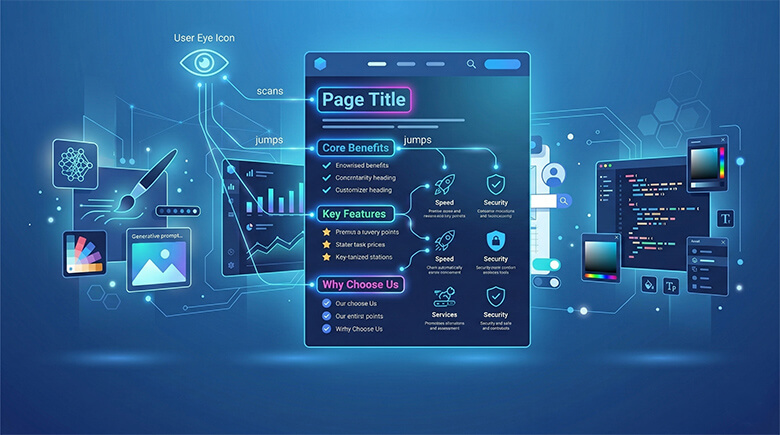
Modern users rarely read websites from top to bottom. Instead, they scan quickly for signals that indicate relevance and credibility.
Design trends in 2026 will continue to prioritize layouts that support scanning behavior.
- Clear visual hierarchy
- Concise headlines
- Bullet points instead of long paragraphs
- Strategic use of visuals and icons
When information is easy to scan, visitors can understand a company’s value faster — which increases engagement and conversion.
3) Fewer Pages, Stronger Pages
Many websites still rely on large numbers of pages filled with lengthy content. But modern website strategy increasingly favors fewer, stronger pages.
Instead of scattering information across many sections, effective websites focus on clearly structured pages that deliver key information quickly.
This approach improves both user experience and search visibility while helping businesses communicate their value more clearly through thoughtful web design strategy and UX structure.
4) Subtle Interaction and Micro-Experiences
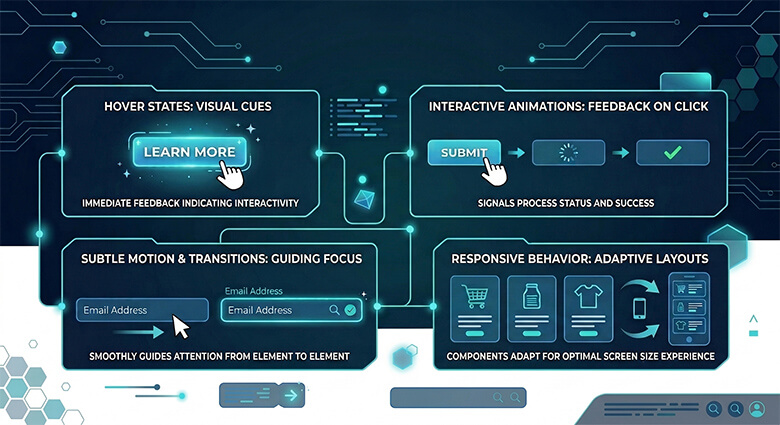
Animation and motion are evolving from decorative effects into tools that guide user attention.
Small interactive moments — such as hover states, animated transitions, and subtle motion — help visitors understand where to focus and what actions are possible.
When used carefully, these micro-experiences make interfaces feel responsive and intuitive without becoming distracting.
5) Performance-First Design
Speed and performance continue to influence both search rankings and user satisfaction.
Websites in 2026 will increasingly prioritize performance-first design, where visual elements and technical decisions are optimized to keep pages fast and responsive.
This includes:
- Optimized images and media
- Efficient code and frameworks
- Design systems that reduce unnecessary complexity
A fast website doesn’t just improve technical metrics — it also creates a smoother and more professional user experience.
6) Authentic Visual Branding
Stock photography and generic design elements have become increasingly recognizable to users.
Brands that stand out visually are investing in distinctive illustration styles, custom graphics, and consistent design systems.
Authentic visual branding helps companies communicate personality and credibility while differentiating themselves from competitors.
Looking Ahead
The most important web design trends for 2026 are not simply aesthetic choices. They reflect deeper changes in how people interact with digital experiences.
Websites that succeed will focus on clarity, performance, and user-centered structure rather than visual novelty.
Businesses that adapt to these shifts will create websites that are easier to use, easier to understand, and ultimately more effective.
Thinking about updating your website for 2026?
SodaPop Media helps organizations design websites that combine clear messaging, modern UX strategy, and performance-focused design.